

A few days ago, while I was writing the introductory post for this blog — which I named “Hello World” (give it a read if you haven’t yet!) — I started thinking about this little tradition. I remembered reading something about its origin some time ago, so I thought it would be a good first post to dig into… or second, I guess? Either way, it felt like the right topic to start with.
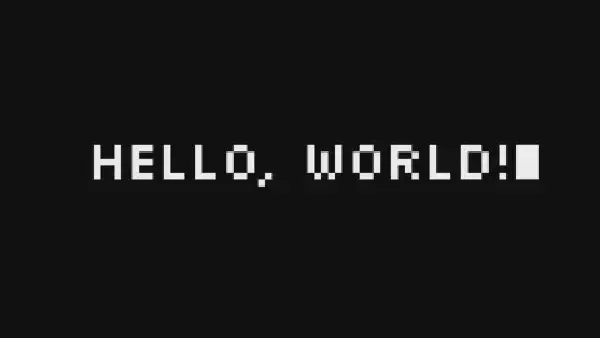
Hello World!
What is “Hello World”?#
When people begin learning programming, the very first program they usually write is called “Hello World”. It is a tiny piece of code whose only purpose is to show some text on the screen. Nothing fancy, nothing complex — just a simple confirmation that everything works: the compiler, the editor, the environment, and of course, the programmer.
A Hello World is like saying: “Okay, I’m here. Let’s begin.”
What It Looks Like#
In most high-level languages, printing text is extremely simple. For example, in Python:
print("Hello, World!")
Or in C, which is a bit more verbose:
#include <stdio.h>

int main(void) {
    printf("Hello, World!\n");
    return 0;
}
Even if these examples look trivial, they represent an important moment. They are the first successful interaction with a new language or toolchain.
A Short History#
The concept has a long history. One of the earliest known appearances is in “A Tutorial Introduction to the Language B” (1972), written by Brian Kernighan. In that tutorial, there is a small program that simply prints “hello, world”. This was probably the first time the phrase appeared in a programming example, the example in the book is shown below.
main( ) {
        printf("hello, world");
}
A few years later, in 1978, Kernighan and Ritchie published the now classical book “The C Programming Language”, usually called K&R. This book contained a Hello World example very similar to the one we still use in C today. Because the book became extremely influential, the Hello World example became a standard tradition across the programming world.
Since then, almost every new language or tutorial starts with some variation of “Hello, World!”.
Meet Blinky!#
While Hello World works well for desktop or scripting languages, it does not make much sense in embedded development.
Most microcontrollers do not have:
- a screen
- a console
- a standard output
- or even an operating system
So… printing text is simply not an option.
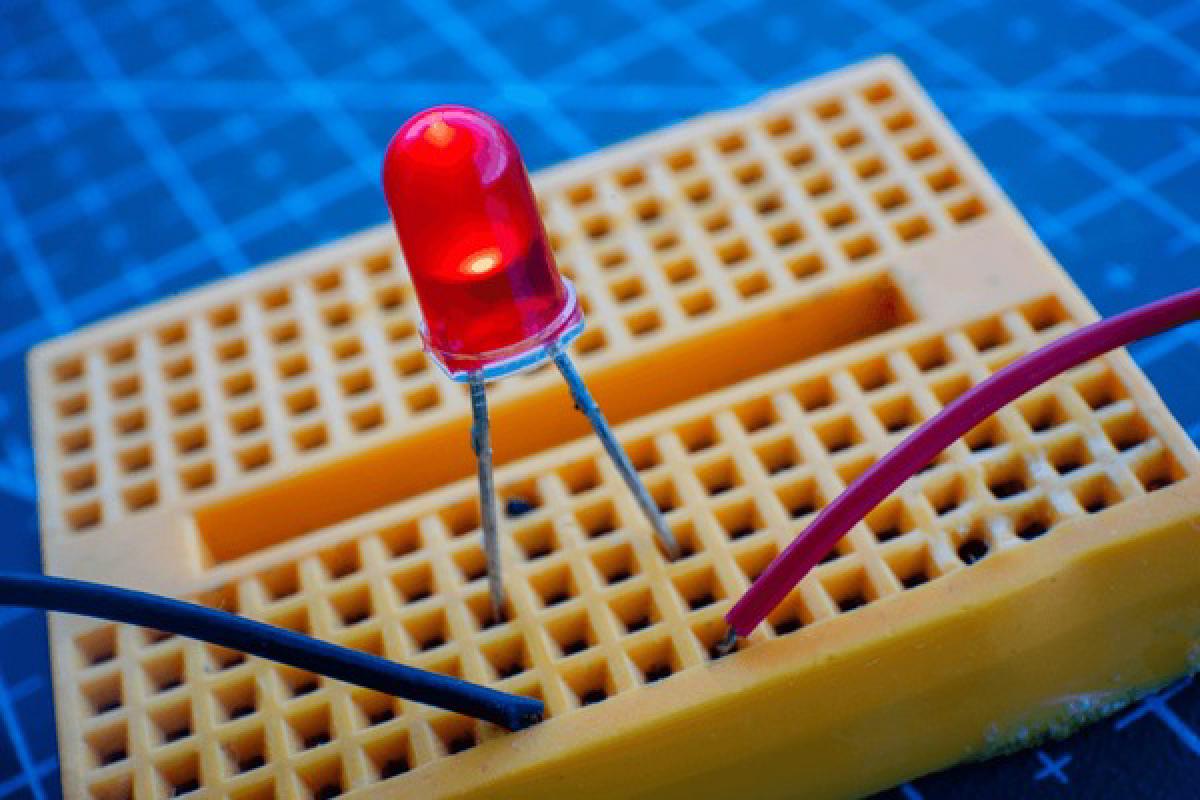
In embedded systems, the equivalent of Hello World is known as “Blinky”: a tiny program that turns an LED on and off in a loop. Usually this LED is part of a development board. If it blinks, it means the firmware is running, the clock is configured correctly, the toolchain works, the programmer flashed the microcontroller successfully, and the device is alive.
A typical blinky in C might look like this (conceptually):
int main(void) {
    setup_gpio_led();

    while (1) {
        toggle_led();
        delay_ms(500);
    }
}
This small blinking LED is the embedded developer’s version of printing “Hello, World!”. It is the first confirmation that the hardware, the toolchain, and the firmware setup are all correct.
A Simple Beginning#
Whether it’s a message on the screen or a blinking LED on a board, every project starts with a tiny signal: “Hello, I’m running”. It’s a small step, but it carries a lot of meaning. From this little beginning, entire systems and products eventually grow.
For me, writing this blog feels a bit like that first Hello World. A simple moment, but the start of something new.
More posts will come soon — and hopefully more interesting than blinking LEDs.